Artificial Intelligence (AI) refers to the ability of machines and software to perform tasks that normally require human intelligence. These tasks include learning from data, recognizing patterns, understanding language, and making decisions. AI systems use algorithms and large amounts of data to improve their performance over time. Today, AI is no longer limited to research labs; it has become an essential part of our everyday digital experiences.
How AI Became Part of the Internet
AI has gradually integrated into the internet through advancements in computing power, data availability, and machine learning techniques. Every time users search, shop, or interact online, AI systems analyze their behavior to deliver better results. From personalized recommendations to automated responses, AI is deeply embedded in modern internet services, making online interactions faster and more efficient.
How AI Powers Search Engines
Smart Search Results and Algorithms
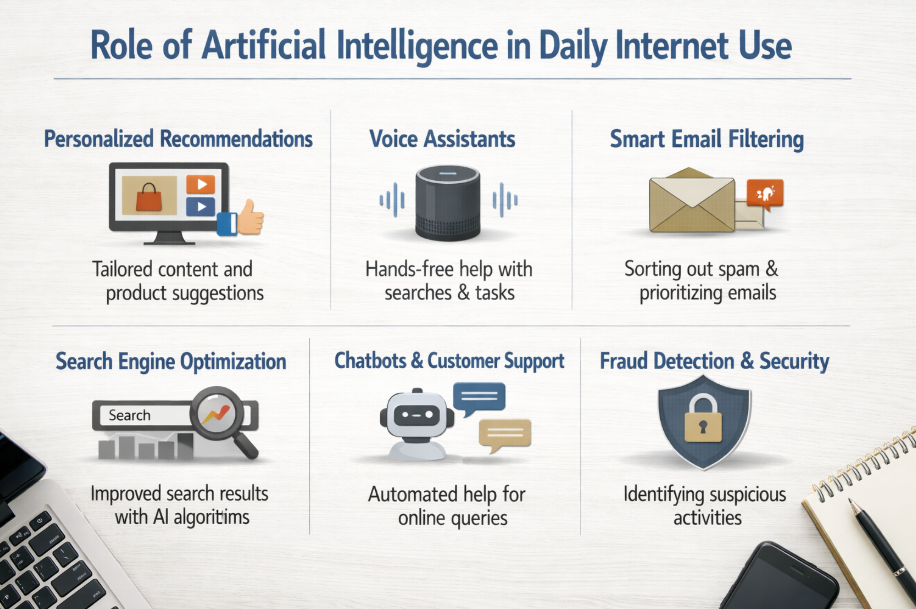
Search engines use AI to understand user queries and provide accurate results. Instead of simply matching keywords, AI algorithms analyze the intent behind a search. This allows users to receive more relevant and useful information. AI also ranks websites based on quality, relevance, and user engagement, improving the overall search experience.
Voice Search and AI Assistants
Voice search has become increasingly popular due to AI-powered assistants. These systems can understand spoken language, interpret meaning, and respond in real time. This makes searching more convenient, especially for mobile users. AI assistants also learn from user behavior, becoming more accurate and personalized over time.
AI in Social Media Platforms
Content Recommendations
Social media platforms rely heavily on AI to recommend content. AI analyzes user interactions such as likes, shares, and comments to suggest posts, videos, and pages that match individual interests. This keeps users engaged and ensures they see content that is relevant to them.
Personalized Feeds and Ads
AI personalizes social media feeds by prioritizing content based on user preferences. It also powers targeted advertising by analyzing user data. Advertisers can reach specific audiences, while users receive ads that are more relevant to their interests. This creates a more efficient system for both businesses and users.
Role of AI in Online Shopping
Product Recommendations
AI enhances the online shopping experience by suggesting products based on browsing history and previous purchases. This helps users discover items they might be interested in, saving time and effort. Personalized recommendations also increase customer satisfaction and sales for businesses.
Chatbots and Customer Support
AI-powered chatbots provide instant customer support on e-commerce websites. These bots can answer common questions, guide users through purchases, and resolve issues quickly. This reduces the need for human support and ensures 24/7 assistance for customers.
AI in Online Communication Tools
Smart Replies and Auto Suggestions
AI improves communication by offering smart replies and suggestions in messaging platforms. These features analyze the context of conversations and provide quick response options. This saves time and makes communication more efficient.
Spam Filters and Security
AI plays a crucial role in detecting spam and harmful messages. Email services and messaging platforms use AI to identify suspicious content and block unwanted messages. This helps protect users from scams and ensures safer communication online.
AI in Entertainment and Streaming
Video and Music Recommendations
Streaming platforms use AI to recommend movies, shows, and music based on user preferences. By analyzing viewing and listening habits, AI creates personalized playlists and suggestions. This enhances user satisfaction and keeps audiences engaged.
AI in Gaming and Content Creation
AI is also transforming gaming and content creation. In gaming, AI controls non-player characters and creates realistic environments. In content creation, AI tools assist with editing, design, and even writing, making it easier for creators to produce high-quality content.
AI for Online Learning and Education
Personalized Learning Experience
AI is revolutionizing online education by offering personalized learning experiences. It adapts content based on a student’s progress and learning style. This helps students understand concepts better and learn at their own pace.
AI Tutors and Learning Platforms
AI-powered tutors provide instant feedback and guidance to students. These systems can answer questions, explain concepts, and track progress. Online learning platforms use AI to improve course recommendations and enhance the overall learning experience.
AI in Cybersecurity and Privacy
Threat Detection Systems
AI helps detect and prevent cyber threats by analyzing patterns and identifying unusual activities. It can quickly recognize potential attacks and respond before significant damage occurs. This makes online systems more secure.
Fraud Prevention Mechanisms
Financial institutions use AI to detect fraudulent transactions. By monitoring user behavior, AI can identify suspicious activities and alert users or block transactions. This reduces the risk of financial loss and improves trust in online services.
AI in Online Banking and Finance
Fraud Detection
AI systems continuously monitor transactions to identify unusual patterns. If something suspicious is detected, immediate action is taken to prevent fraud. This ensures safer online banking experiences for users.
Smart Financial Assistance
AI-powered tools help users manage their finances by providing insights and recommendations. These tools analyze spending habits and suggest ways to save money, making financial management easier and more efficient.
Advantages of AI in Daily Internet Use
Time Saving and Automation
One of the biggest advantages of AI is its ability to automate repetitive tasks. From answering queries to filtering emails, AI saves time and increases productivity. Users can focus on more important activities while AI handles routine tasks.
Improved User Experience
AI enhances the overall user experience by providing personalized and relevant content. It makes online interactions smoother, faster, and more efficient. This leads to higher satisfaction and better engagement.
Disadvantages and Risks of AI
Privacy Concerns
This raises concerns about data privacy and security. Users may worry about how their information is collected, stored, and used.
Job Displacement and Dependence
As AI automates tasks, there is a risk of job displacement in certain industries. Additionally, over-reliance on AI may reduce human skills and decision-making abilities. It is important to find a balance between automation and human involvement.
Future of AI in Internet Usage
Emerging Trends
The future of AI in internet usage looks promising, with continuous advancements in technology. Innovations such as smarter assistants, improved automation, and more accurate predictions will further enhance online experiences.
What to Expect in the Next 5 Years
In the coming years, AI is expected to become even more integrated into daily internet use. It will provide more personalized services, improve security, and make digital interactions more seamless. As technology evolves, AI will continue to shape the way people use the internet.