
Somewhere around the third or fourth batch of damage complaints, most business owners start asking the same question: why does this keep happening? The box looked fine on the design proof. It looked fine sitting on the shelf. And yet a chunk of orders keep arriving crushed, torn, or falling apart before the customer even gets a chance to use whatever’s inside.
It’s rarely one big obvious mistake. Usually it’s a handful of small decisions made early on, back when the packaging was being designed, that quietly set the whole thing up to fail once it hit real shipping conditions. Here’s what actually tends to be going wrong, and what fixes it.
The Box Wasn’t Tested Under Real Conditions
This is the big one. A lot of custom packaging gets approved based on how it looks the proof arrives, everyone likes the colors and the logo placement, and it goes straight into production without anyone actually shipping a test batch through the same carrier route customers will experience. A box can look completely solid sitting still on a table and still fail within a single truck ride, especially once it’s stacked under other packages or handled roughly at a sorting facility.
Real-world testing doesn’t need to be complicated. Shipping a handful of test packages to a few different addresses, ideally covering both short and long distances, tells you more about how a box will actually hold up than any amount of staring at a sample in the office. If something’s going to fail, it’s much better to find out with five test boxes than five hundred customer orders.
Flute Strength Doesn’t Match the Product
Corrugated board comes in different flute types, and the difference matters more than most people assume when they’re picking one mostly based on price. A thinner flute might be perfectly fine for something light and low-risk, but it won’t hold up under the weight of a heavier product or the pressure of being stacked in a truck with other packages on top of it. This is one of the most common reasons a box that seemed sturdy enough in testing starts collapsing once real order volume and real stacking pressure come into play.
Matching flute strength to actual product weight, and building in a little extra margin for rough handling, solves a huge chunk of structural failures before they ever start.
Inserts and Cushioning Were an Afterthought
A lot of custom packaging gets designed around how the outside looks, with the interior treated as something to figure out later, if at all. That’s backwards for anything remotely fragile. Without proper inserts, foam padding, or dividers keeping a product in place, even a well-built box lets its contents shift and collide during transit, and that movement is what actually causes most breakage, not weakness in the box itself.
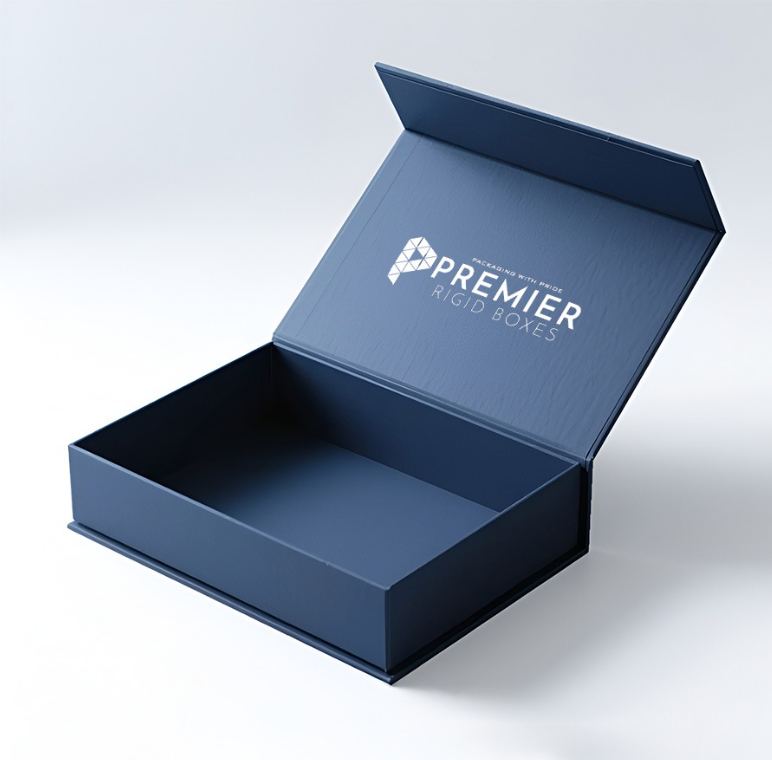
This matters even more for premium products, where the packaging is doing double duty as both protection and presentation. Businesses shipping higher-end items have started leaning on luxury rigid box with custom-fitted foam or fabric inserts specifically because a loose product rattling around inside an expensive-looking box undoes the whole premium impression the packaging was supposed to create in the first place. The outside can look flawless and it won’t matter if the product inside arrives cracked because nothing was holding it in place.
The Box Was Sized Wrong in Either Direction
Too big and the product has room to slide around, building up momentum that turns small bumps into real damage. Too small and the box gets overstuffed, putting stress on the seams and corners until they give out under pressure that a properly sized box would have distributed evenly. Either way, the sizing itself becomes the source of the failure, independent of how strong the material is.
Getting sizing right usually means measuring the actual product, adding just enough room for whatever cushioning is going in, and resisting the temptation to round up to a bigger standard size just because it’s already in stock.
Designed for Safe Shipping from Start to Finish
What appears secure after hours spent in a warm, dry warehouse can react quite differently after being left in a hot delivery truck or the humid loading dock for a couple of hours. The less expensive glues fail at humidity and temperature fluctuations and if a seam begins to separate, the entire structural strength of the box is lost. This is particularly true for custom-printed tape, as businesses may opt for the branded appearance over the quality of the adhesive behind it.
Fixing It Without Starting from Scratch
None of these issues require redesigning packaging from the ground up. Most of the time it’s a matter of adjusting one or two specific elements bumping up flute strength, adding a simple insert, resizing slightly, switching adhesive suppliers rather than scrapping a design that customers already recognize and like the look of.
The real fix is building testing into the process before a design goes into full production, instead of treating damage complaints as the testing phase. A box that survives a handful of real shipping trials before launch saves a business from finding out the hard way, order by order, exactly where the weak point was.
The Bottom Line
Packaging that keeps breaking is rarely bad luck. It is typically a minute, discrete problem between the actual use of the box and its design. The gap once discovered- whether it be flute strength, sizing, cushioning or the adhesive that binds it all together is a problem that can be solved and will return customer investment quite quickly when it comes to fewer refunds and more people who receive exactly what they ordered.