
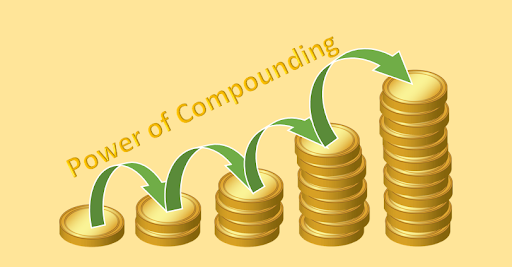
In the world of personal finance and investing, the term “compounding” is often revered as one of the most important concepts to understand. The power of compounding is a crucial factor that can significantly impact your financial health over time. This article delves into the essence of compound interest, its formula, and why it is crucial for your financial journey today.
What Is the Power of Compounding?
Compounding refers to the process of generating earnings on an asset’s reinvested earnings. In simpler terms, it’s earning interest on both your initial investment (the principal) and the accumulated interest from previous periods. This concept is not just applicable to money but can also apply to knowledge, skills, and experiences. The power of compounding works best when you give it time.
How Compounding Works
Imagine you invest 1,000 at an interest rate of 5% per year. After the first year, you would earn 50 in interest, bringing your total to 1,050. In the second year, you earn interest on 1,050 rather than just the original 1,000. If you leave your investment untouched, by the end of the second year, you’ll have approximately 1,102.50. This process continues, creating a snowball effect that can significantly increase your initial investment over time.
What Is the Formula for Interest?
To understand how the power of compounding works, it’s essential to know the formula for compound interest. The compound interest formula is:
[ A = P (1 + )^{nt} ]
Where: – ( A ) = the amount of money accumulated after n years, including interest. – ( P ) = the principal amount (the initial money). – ( r ) = the annual interest rate (decimal). – ( n ) = the number of times that interest is compounded per year. – ( t ) = the number of years the money is invested or borrowed for.
Breaking Down the Formula
- Principal Amount (P): This is your initial investment, the base sum of money.
- Rate of Interest (r): This is the annual interest rate expressed as a decimal. For a 5% rate, r would be 0.05.
- Number of Compounding Periods (n): This is how many times the interest is applied within a year. It can be annually, semi-annually, quarterly, monthly, or daily.
- Time (t): This is the total number of years you plan to keep your investment.
Understanding how each component interacts can provide you with insights into how different investments might grow over time.
The Impact of Time on Compounding
One of the most significant implications of the power of compounding is the impact of time. The longer you allow your money to grow, the more it multiplies. Because the results of compounding are exponential rather than linear, even small initial investments can grow to substantial amounts over several decades.
The 72 Rule: A Simple Estimation
Investors often use the “Rule of 72” to estimate how long it will take for an investment to double at a specific interest rate. You simply divide 72 by the annual interest rate. For example, if your investment has a 6% return, it will take approximately 12 years (72 ÷ 6) to double. This quick calculation can help investors gauge the potential growth of their investments immediately.
Why Compound Interest Is Essential Today
In today’s economic landscape, understanding the power of compounding is more important than ever:
1. Retirement Planning
With the shift from employer-sponsored pensions to individual retirement accounts, compounding becomes crucial in retirement planning. The earlier you start investing for retirement, the more time your money has to compound. Even small contributions can lead to significant savings over time.
2. Generational Wealth
Building generational wealth relies heavily on compounding. By investing early, families can create a legacy for future generations. Educating your children about the importance of saving and investing now can lead to compounded wealth over their lifetimes.
3. Combatting Inflation
In an era of rising inflation, simply saving money may not suffice. Investing and allowing your investments to compound can help keep up with or outpace inflation’s erosive power on purchasing power. Understanding what is the formula for interest? can also help you estimate potential returns and make smarter long-term investment decisions.
4. Wealth Creation and Opportunity
In an increasingly dynamic economy, the ability to create wealth through investments is vital. Understanding the power of compounding will empower investors to take advantage of opportunities that can lead to significant financial gain.
Tips for Maximizing the Power of Compounding
To maximize the benefits of compounding, consider these strategies:
1. Start Early
The sooner you begin investing, the more time your money will have to grow. Even if you can start with a small amount, the effects of compounding can be substantial over time.
2. Reinvest Earnings
Always reinvest your interest and dividends. This will allow your investment to grow at a faster pace.
3. Be Consistent
Regular contributions to your investment account, regardless of the market state, can amplify benefits. Dollar-cost averaging – investing a fixed amount regularly – can help you take advantage of market fluctuations.
4. Incremental Increases
Gradually increasing your investment contributions as your financial situation improves can lead to significant growth over time.
5. Stay Informed
Understanding economic changes, interest rates, and investment vehicles can help you make informed decisions that enhance your financial journey.
Conclusion
The power of compounding is indeed one of the most critical financial concepts today. Whether it’s planning for retirement, building generational wealth, or simply combatting inflation, understanding and leveraging compounding can lead to significant financial success. By grasping the formula for calculating interest and recognizing the importance of time in compounding, you can position yourself to make informed decisions that will benefit you and your family for generations to come. Start today, invest wisely, and let the power of compounding work for you!