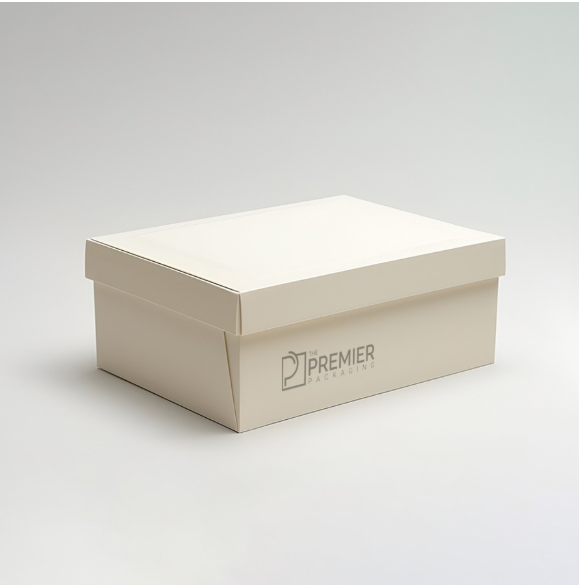
Now in the modern market, packaging is an integral part of the product experience. The shoe box is the last place in the store where a retailer can brand. For the end-user, it is a long-term storage solution that will determine the life span of their investment. This manual explains the technical and aesthetic requirements of the cardboard shoe box, and provides a blueprint for commercial viability and home organization.
1. The Anatomy of Durability: Material Grades
The quality of the cardboard used is the base of the quality of any cardboard shoe boxes. Choosing the wrong material could cause the product to be crushed during shipping or cause a stack to collapse in the closet.
B-Flute Corrugated: Recognized for its outstanding crush resistance. This is the standard used for shipping boots or heavy athletics.
E-Flute Corrugated: Thin, high-quality board for high-resolution printing. It looks “sleek” but still retains the structural strength.
The luxury option is Solid Bleached Sulphate (SBS). It is a high quality and bright white paperboard which offers great color rendition and smooth clay coated surface.
If you’re stacking more than five units tall, consider using B-Flute or reinforced E-Flute to prevent the bottom box from caving in.
2. Design Architectures: Choosing the Right Silhouette
The “style” of the box determines how a user will interact with the product. The perceived value of the item inside is completely changed if the folding pattern is altered.
Self-Locking Mailer
A one-piece that’s often called the Ear Lock box is extremely secure. The side flaps lock into place at the front, which prevents it from opening up by accident after it has been sent out to be shipped. It’s the best for ecommerce brands.
Rigid Set-Up Box
These are ready to put together and stand upright, in contrast to folding cartons. They are composed of sturdy chipboard that is not collapsible. This style is synonymous with high-end luxury brands and the weight and “thud” of the lid closing relates to quality and craftsmanship.
Magnetic Closure Box
These boxes are a blend between retail and home use and have a concealed magnet in the lid. They are very popular with collectors and are ideal for every day wear and still look high profile.
3. The Luxury Factor: Enhancing the Visual Narrative
Aesthetics is the place where a brand succeeds or fails. Today premium packaging is based on less is more principle, with deep and sophisticated color palette and tactile finishes.
Soft-to-the-touch finger print resistant mate lamination ideal for dark blue or black boxes.
Spot UV & Gold Foiling: Glossy layers or gold foil can be applied to a logo, giving it a very contrasting look on a matte background, instantly enhancing the prestige of the brand.
Embossing: Raising the logo or a pattern off the surface of the box by means of a physical process gives the customer a three dimensional sensation.
4. Operational Efficiency: Storage and Assembly
Boxes for businesses can be the hidden cost if space is used up before they are in use. For homeowners, it involves the time they have to put into the management.
Most folding cardboard boxes are sent flat (also known as flat-packed logistics). This decreases transport carbon footprints and enables a company to keep thousands of units in a compact space of a warehouse.
High quality boxes have deep clean scoring (Pre-Scored Lines) This will ensure corners are crisp and integrity is maintained when it is time to fold.
Ventilation Holes: For both retail and home, small ventilation holes enable the shoes to breathe, a matter that avoids leather smells or dampness building up.
5. The Lifecycle Strategy: From Storefront to Closet
Never use a box “single-use. The best designs are ones that the customer desires to retain.
- Phase 1: Protection. The box makes it to the consumer without breaking.
- Phase 2: Presentation. The unboxing moment is a positive psychological moment.
- Phase 3: Preservation. The customer will use the box for years to keep the shoes away from dust, sun and humidity.
6. Technical Specification Table
| Feature | Standard Grade | Premium/Luxury Grade |
| Material | Kraft Corrugated | SBS or Rigid Chipboard |
| Coating | Uncoated | Matte/Gloss Lamination |
| Lock Style | Friction Tuck | Magnetic or Ribbon Tie |
| Print Method | Flexographic (Simple) | Offset or Digital (High-Def) |
| Best For | Daily Sneakers / Shipping | Designer Heels / Collectors |
7. The Future of Sustainable Footwear Housing
The transition towards the ‘Circular Economy’ packaging concept is no longer a small trend, it is the norm. Nowadays, the inks and coatings used in cardboard boxes are being made from soy and using water, so even the fanciest carton boxes can be recycled safely.
In addition, QR codes are increasingly being printed on the bottom of the box by many brands. These codes can connect with tutorials on shoe care or digital certificates of authenticity, thus making a shoe box a digital portal.
Conclusion
Black cardboard shoe boxes is an engineering wonder that is right under everyone’s nose. Retailers can make a long-lasting impression with their store by choosing the right material grade, opting for a structural design and investing in high-quality finishes such as gold foil or matte lamination. At the same time, these same attributes come with the durability and uniformity of appearance that homeowners demand for a professional grade line at home.