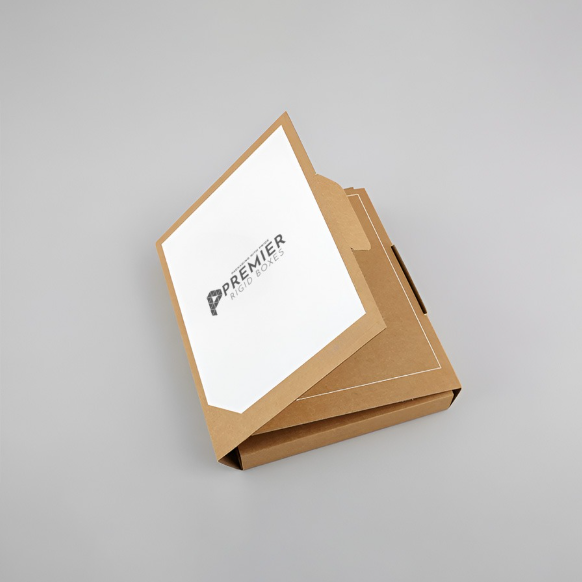
While today’s world is filled with digital messages and fleeting screen engagements, the tangible delivery of a document is a special gesture that stands out. A business that gives a booklet, no matter if it is a luxurious catalogue of its best products, a corporate brochure or a special look book, it is basically giving its brand’s flesh and blood. It is considered to be mail if this booklet is received in a standard envelope made of flimsy paper. When it comes wrapped in a custom-made, hands-on designed package, it is regarded as an asset.
Creating a superior experience doesn’t just mean appearance it’s a psychological and engineering maneuver. It is about creating a story that starts when the person receiving the box has their hands on it.
The Structural Blueprint: Form Following Function
The first step to a high-end experience begins with the physical design of the container. Ideas are like a booklet, and the ideas deserve a house that reflects them.
A tuck-top box or a tuck-end folding carton are among the best means of raising a booklet. These structures add depth to the envelope, unlike a standard envelope. They give an impression of “permanent housing”, implying that the material should be left on a bookshelf instead of being thrown in a recycling bin.
If you need a high level of protection, like the heavy cardstock and complicated foil stamped covers in booklets, then you need reinforced protection. A good paperboard that is thick and quality will help to keep the edges of the booklet crisp and sharp. The mechanical satisfaction of opening a well-fitted tuck-top lid, with a little resistance, then a smooth release is the first sensory trigger that the recipient is about to experience something of high value.
The Palette of Authority: Colors That Speak
Color is the most direct method to express a brand’s personality. In the premium packaging world, it’s often about instilling trust, luxury and “quiet power.”
Many designers are turning to rich, deep colors to get a distinct and original look to their website. The background is dark navy blue, creating a classic look. It’s a hue that offers stability and expert lineage. It gives a “pop” when combined with a metallic gold or a yellow accent and makes it look like it is very expensive.
The Tactile Dimension: Design Beyond Sight
Sight is only one-half of the premium experience. The best packaging uses the sense of touch to reinforce the brand’s message. As soon as the client receives a Booklet Rigid Box, he or she should feel the quality difference in his or her fingertips.
It is the core element of luxury packaging today known as “Matte Lamination.” It eliminates the brightness of normal paper and makes it more “soft” to the touch. It’s also very functional as it helps keep the box safe from fingers and scuffing while it’s being transported.
Embossing and Debossing: Using a technique that literally raises or lowers the cardboard in the area to emboss or deboss the brand’s logo or a specific pattern, it gives the design a 3D look. It encourages a tactile interaction with the brand, as the recipient uses their fingers to explore its texture.
Spot UV – Foiling techniques are used to produce contrast. Now visualize a matte black box with only the logo completely done in a high-gloss spot UV or shimmering gold foil. The interplay of these elements with the light is a dynamic visual effect that cannot be achieved with regular printing.
Curating the Reveal: The Unboxing Choreography
The unboxing experience is now an essential component of the consumer journey in 2026. This is the flow from the outside container to the message inside a booklet. This moment should be choreographed so that it raises anticipation.
Consider a multi-layered approach to the booklet, rather than placing it into the box. The recipient may find a vellum sheet that is clear, with a welcome message, when they open the tuck-end lid. The booklet is secured by a custom cardstock insert underneath, providing the booklet with a perfect center. The process of “reveling” is made gradual, giving the reader a chance to pause, and the opening of the package becomes a ceremony. It makes the document a gift, whether or not it contains a gift item.
Sustainability is now a high-end feature
Responsibility is the key word for modern luxury. This is a luxury experience that can hurt the brand’s image if it is perceived as futile. The most ‘unique’ packaging solutions today are those that are beautiful as they are sustainable.
The outer box can be made from uncoated, recycled Kraft paper to make a beautiful organic luxury box. The Kraft paper itself has a nice texture that offers a great counterpoint when paired with premium printing methods, such as white ink or metallic foils. Moreover, by making the shift to plastic-free designs (like adhesive-free die-cut tabs), the entire pack is as eco-friendly as it is elegant. The brand’s dedication to the future is further emphasized by using soy-based or water-based inks.
How to leverage catalogs as a marketing strategy to create proposals
The beauty about creative booklet packaging is that it is versatile. Its applications range from different industries with various purposes:
Product Catalogs: Make a listing style into a high end look book that your customers desire to put on their coffee tables.
(See Business Proposals) Make sure that your business proposal is the one that is on the CEO’s desk.
For luxury appliances or tech, if there is an instruction manual, it will be well-packaged, which is a reflection of the quality of the machine.
Event Programs: In high-profile conferences and galas, the packaging transforms a program into a treasured keepsake.
Conclusion
The ultimate creative booklet packaging is to discourage the document to be disposable. A tuck-top building, a high-end colour scheme and tactile finishes are all telling the recipient that what is inside is useful.
You are taking the paper from the trash pile to keep pile. Doing so will keep your brand in the hands, and minds, of your audience long after the first encounter or purchase. The packaging is the connection between the document and the lasting impression of the brand.