
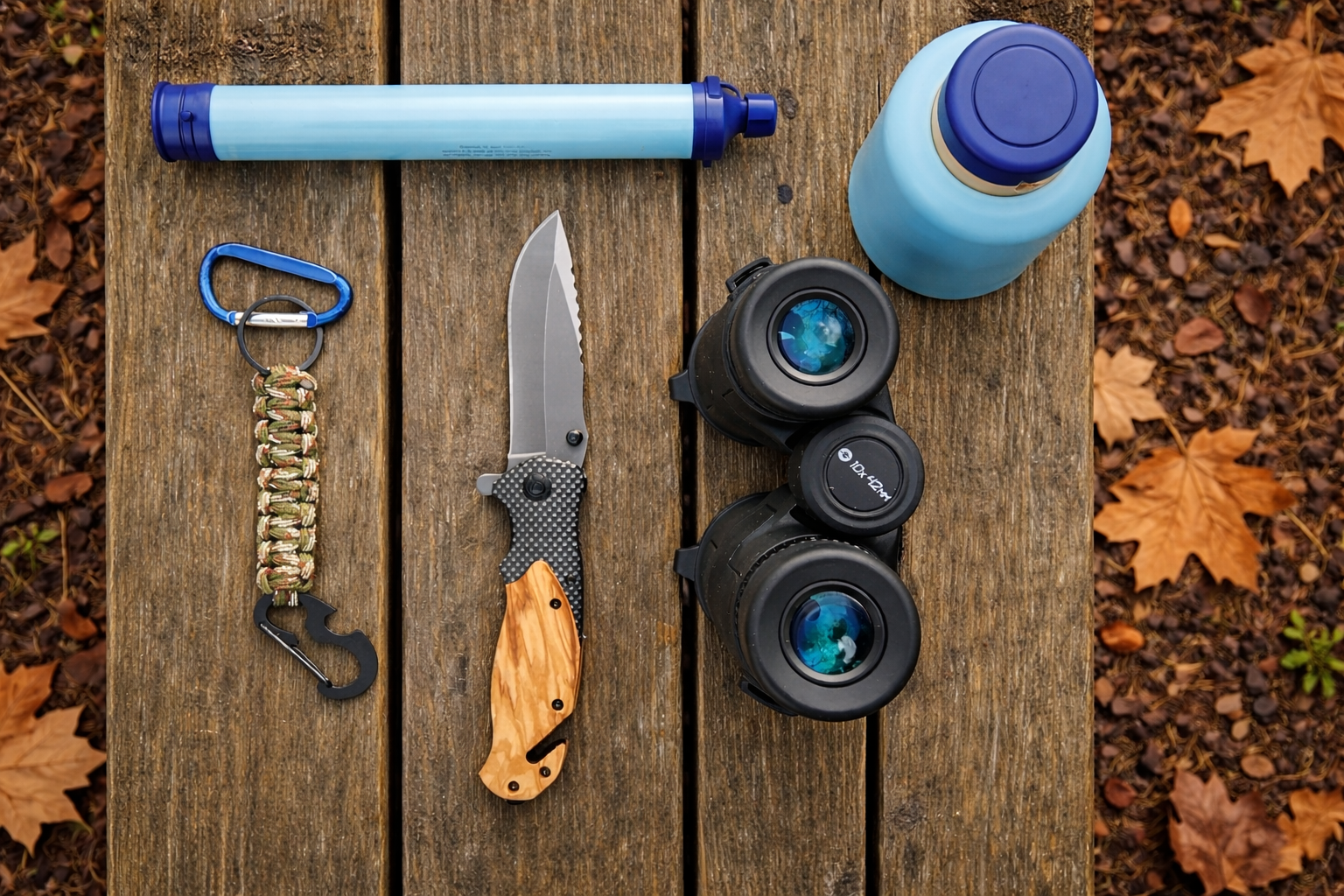
When you’re preparing for your first serious outdoor adventure, one of the most critical decisions you’ll make is selecting the right knife. Whether you’re searching for the best pocket knife for backpacking or a robust fixed-blade survival tool, understanding what makes a quality knife for outdoors can mean the difference between a successful trip and a frustrating experience in the wilderness.
A good outdoor knife isn’t just a cutting tool—it’s your companion for preparing food, building shelter, creating fire, performing first aid, and handling countless other tasks that arise when you’re miles from civilization. This comprehensive guide will walk you through everything you need to know to make an informed decision on your first outdoor survival knife.
Understanding Different Types of Outdoor Knives
Before diving into specific features, it’s important to understand the main categories of knives suitable for outdoor use. Each type serves different purposes and excels in particular situations.
Fixed-blade knives are the traditional choice for serious outdoor enthusiasts. These knives have a blade that extends directly into the handle without any moving parts, making them incredibly durable and reliable. Fixed-blade knives can handle heavy-duty tasks like batoning wood, clearing brush, and processing game. They’re typically stronger than folding knives because there’s no pivot point that could fail under stress.
Folding knives offer portability and convenience, which is why many hikers consider them the best pocket knife for backpacking. These knives fold into their handles, making them compact and easy to carry in your pocket. Modern folding knives feature locking mechanisms that keep the blade secure during use, though they generally aren’t suitable for the most demanding tasks that fixed blades excel at.
Multi-tools combine a knife blade with various other implements like pliers, screwdrivers, and scissors. While versatile, the knife blade on a multi-tool is usually the compromise you make for having multiple tools in one package.
For your first outdoor survival knife, most experts recommend starting with either a quality fixed-blade knife or a reliable folding knife, depending on your specific needs and the type of activities you’ll be pursuing.
Blade Length: Finding the Sweet Spot
One of the first specifications you’ll encounter when shopping for a knife for outdoors is blade length. This measurement significantly impacts what tasks your knife can perform effectively.
For general outdoor use, a blade length between 3.5 and 5 inches offers the best balance of versatility and practicality. This range allows you to handle detailed tasks like preparing food and first aid while still being capable of more demanding jobs like feathering sticks for fire-starting or processing small game.
If you’re specifically looking for the best pocket knife for backpacking, you might consider something slightly shorter, in the 2.5 to 4-inch range. These knives are easier to carry, lighter in weight, and perfectly adequate for the tasks most backpackers encounter on the trail.
Knives with blades longer than 5 inches start entering survival or bushcraft territory. While these can be excellent tools, they’re often heavier and bulkier than necessary for casual outdoor enthusiasts. Conversely, blades shorter than 2.5 inches may struggle with tasks that require more leverage or cutting power.
Remember that in many jurisdictions, blade length is regulated by law, so check your local regulations before making a purchase, especially if you plan to travel with your knife.
Blade Material: Steel Types Explained
The steel used in your knife blade determines its performance, durability, and maintenance requirements. Understanding the basics of blade materials will help you choose a knife for outdoors that matches your needs and maintenance preferences.
Stainless steel blades contain chromium, which provides excellent corrosion resistance. This makes them ideal for environments where your knife might be exposed to moisture, salt water, or humid conditions. Popular stainless steels like 440C, VG-10, and S30V offer good edge retention and require minimal maintenance. For backpackers who want a low-maintenance option, stainless steel often represents the best pocket knife for backpacking choice.
Carbon steel blades, such as those made from 1095 or O1 steel, are easier to sharpen and can achieve a keener edge than most stainless steels. They’re also typically tougher, making them resistant to chipping. However, carbon steel requires more care because it’s susceptible to rust and corrosion. You’ll need to keep the blade clean and dry, and many users apply a light oil coating for protection.
High-end steels like CPM-S30V, CPM-S35VN, and M390 offer the best of both worlds with excellent edge retention, good corrosion resistance, and impressive toughness. These premium steels come at a higher price point but can be worth the investment if you plan to use your knife extensively.
For beginners, a mid-range stainless steel often provides the best balance of performance and ease of maintenance, making it a practical choice for your first outdoor knife.
Blade Shape and Grind: Form Follows Function
The shape of your knife blade and how it’s ground affect its cutting performance and the types of tasks it excels at.
Drop point blades feature a convex curve from the spine down to the point, creating a strong tip and a large cutting edge. This is arguably the most versatile blade shape and an excellent choice for a first knife for outdoors. Drop points excel at slicing, are easy to control, and the lowered point reduces the risk of accidental punctures.
Clip point blades have a concave curve near the tip, creating a finer, more precise point. While excellent for detail work, the thinner tip is more prone to breaking under stress, making them less ideal for heavy-duty outdoor tasks.
Tanto blades feature a angular tip that’s extremely strong and excellent for piercing, but they’re more specialized and generally better suited for tactical applications than general outdoor use.
Regarding blade grinds, the flat grind removes material evenly from the blade to create sharp, thin edges excellent for slicing. The hollow grind creates an even thinner edge that’s very sharp but more delicate. The Scandi grind, popular on Scandinavian bushcraft knives, is easy to sharpen in the field and creates robust edges suitable for wood processing.
For a versatile first outdoor knife, a drop point blade with a flat or Scandi grind offers excellent all-around performance.
Handle Design and Materials: Comfort and Control
A knife is only as good as your ability to control it, which makes handle design critically important when selecting the best pocket knife for backpacking or any outdoor knife.
Handle materials range from traditional wood and bone to modern synthetics like G10, Micarta, and rubber. Each has advantages. Wood handles are comfortable and attractive but require more maintenance. Synthetic materials like G10 offer excellent grip, durability, and weather resistance with minimal upkeep. Rubberized handles provide superior grip in wet conditions but may degrade over time with UV exposure.
The handle shape should fit your hand comfortably and provide secure grip in various positions. Look for ergonomic contours that prevent the knife from twisting in your hand during use. Some texture or jimping on the handle improves control, especially in wet conditions.
For folding knives, pay attention to how the knife feels both when open and closed. The best pocket knife for backpacking should be comfortable to carry in your pocket without creating hot spots or excessive bulk.
The tang (the portion of blade that extends into the handle) is crucial for fixed-blade knives. A full tang extends the entire length and width of the handle, offering maximum strength. Partial tangs reduce weight but sacrifice some durability. For serious outdoor use, a full tang is generally recommended.
Essential Features to Consider
Beyond the basic blade and handle, several features can enhance your knife for outdoors.
Locking mechanisms are critical for folding knives. Liner locks, frame locks, and back locks all serve to keep the blade open during use. The mechanism should engage positively and disengage smoothly without requiring excessive force. When evaluating the best pocket knife for backpacking, test the lock thoroughly to ensure it inspires confidence.
Blade deployment methods vary on folding knives. Thumb studs, thumb holes, and flipper tabs allow one-handed opening, which can be convenient in the field. However, some hikers prefer traditional two-handed opening for added safety.
Sheath quality matters tremendously for fixed-blade knives. A good sheath protects both you and the blade, holds the knife securely, and allows for comfortable carry. Kydex sheaths offer excellent retention and durability, while leather provides a classic look with good performance if maintained properly. Nylon sheaths are lightweight and affordable but may lack the rigidity of other options.
Pommel design on fixed-blade knives can add functionality. A flat or textured pommel can be used for light hammering tasks, though you should never use your knife as a primary hammer.
Maintenance and Care in the Field
Understanding basic knife maintenance ensures your outdoor knife serves you reliably for years. Even the best pocket knife for backpacking requires proper care.
Sharpening is the most important maintenance task. Learn to use a sharpening stone or rod before heading into the wilderness. A sharp knife is safer and more efficient than a dull one. Many outdoor enthusiasts carry a small diamond or ceramic sharpener in their pack for touch-ups on multi-day trips.
Cleaning your knife for outdoors after use prevents corrosion and ensures smooth operation. Wipe the blade clean of sap, food residue, or blood, then dry thoroughly. For folding knives, periodically clean the pivot area to remove dirt and debris that could impair function.
Lubrication protects moving parts on folding knives and prevents rust on all blades. A light application of oil on the blade and pivot points keeps everything operating smoothly.
Store your knife in a dry environment when not in use, and periodically inspect it for any signs of wear or damage that could compromise safety or performance.
Budget Considerations: Getting the Best Value
Quality outdoor knives are available at various price points. You don’t need to spend a fortune on your first knife for outdoors, but investing in a reputable brand typically pays dividends in performance and longevity.
Entry-level knives from respected manufacturers like Morakniv, Gerber, and Ontario can be found for $20-$50 and offer solid performance for beginners. Mid-range options from brands like Benchmade, Spyderco, and Bark River in the $50-$150 range provide excellent quality and features. Premium knives exceeding $150 offer top-tier materials and craftsmanship but may be unnecessary for someone just starting out.
When shopping for the best pocket knife for backpacking, consider that you’re making an investment in a tool that could last decades with proper care. Sometimes paying a bit more upfront for quality saves money in the long run by avoiding replacements.
Legal Considerations and Responsible Ownership
Before purchasing any outdoor knife, familiarize yourself with the laws in your area and anywhere you plan to travel. Knife laws vary significantly by location, regulating factors like blade length, opening mechanism, and carry methods.
Many wilderness areas and parks allow knives as tools but have specific restrictions. National parks generally permit knives, but some state parks have different rules. Always research regulations before your trip.
When carrying your knife for outdoors in public or during travel, transport it properly. In vehicles, store knives in a secure location, preferably in the trunk or a locked container. When flying, always pack knives in checked luggage, never carry-on bags.
Practice responsible ownership by using your knife only for its intended purposes and respecting the environments where you recreate.
Making Your Final Decision
Choosing your first outdoor survival knife comes down to honestly assessing your needs, the environments you’ll be exploring, and the tasks you’ll most frequently perform.
If you’re primarily a backpacker or hiker who needs a reliable tool for camp chores and trail maintenance, the best pocket knife for backpacking might be a quality folding knife with a 3-4 inch blade in stainless steel. This provides excellent utility while minimizing weight and bulk.
If you’re venturing into more serious wilderness survival, bushcraft, or hunting, a fixed-blade knife with a 4-5 inch carbon or stainless steel blade offers the durability and versatility needed for demanding tasks.
Many outdoor enthusiasts eventually own multiple knives, each optimized for specific activities. However, for your first knife for outdoors, focus on versatility and quality. A single well-chosen knife that you learn to use proficiently is more valuable than multiple specialized tools you haven’t mastered.
Conclusion
Selecting the right outdoor survival knife is a personal journey that depends on your specific needs, preferences, and outdoor activities. By understanding the fundamental aspects of blade materials, designs, and features, you’re now equipped to make an informed decision.
Remember that even the best pocket knife for backpacking or the most expensive survival knife is only as effective as the person wielding it. Invest time in learning proper knife skills, maintenance, and safety practices. Start with a quality knife that fits your budget and needs, then expand your collection as you gain experience and identify specific requirements.
Your first knife for outdoors marks the beginning of a rewarding relationship with a tool that humans have relied upon for thousands of years. Choose wisely, care for it properly, and it will serve you faithfully through countless adventures in the wilderness.