Introduction to Gynecomastia
Let’s talk about something many men struggle with quietly—gynecomastia. If you’ve noticed an unusual enlargement of your chest and wondered why it’s happening, you’re not alone. Thousands of men in Lahore deal with this condition every year.
What Is Gynecomastia?
Gynecomastia is the enlargement of male breast tissue caused by hormonal imbalance—specifically, an increase in estrogen or a decrease in testosterone. It’s not just extra fat. It’s actual glandular tissue growth, and yes, it can happen at any age.
Why Is It More Common Than You Think?
From teenagers going through puberty to older men experiencing hormonal changes, gynecomastia affects up to 60% of males at some point in their lives. The difference? Some cases go away on their own, while others stick around and impact confidence.
Understanding Male Breast Enlargement
Gynecomastia vs Fat Chest (Pseudogynecomastia)
Here’s where many people get confused.
Key Physical Differences
-
Gynecomastia: firm or rubbery tissue under the nipple
-
Fat chest: soft, evenly distributed fat
Think of it like this: gynecomastia is a lump; fat chest is a cushion.
Why Proper Diagnosis Matters
Treating fat with surgery meant for glands—or vice versa—is like using a screwdriver on a nail. Proper diagnosis saves time, money, and disappointment.
Common Causes of Gynecomastia
Hormonal Imbalance
This is the main culprit. Testosterone drops or estrogen rises, and boom—breast tissue grows.
Medications and Drug Use
Certain antidepressants, steroids, heart medications, and even herbal supplements can trigger gynecomastia.
Lifestyle Factors
Alcohol, smoking, anabolic steroids, and recreational drugs are silent contributors.
Medical Conditions
Liver disease, kidney failure, thyroid issues, and tumors can also be responsible.
Gynecomastia in Lahore – A Growing Concern
Cultural and Social Impact
In Lahore’s conservative culture, men often suffer silently. Swimming, gym sessions, and fitted shirts become anxiety triggers.
Awareness Levels in Lahore
Thankfully, awareness is improving. Social media and medical outreach have helped normalize seeking treatment.
Why More Men Are Seeking Treatment
Because confidence matters. Men are realizing that gynecomastia is medical—not shameful—and that solutions exist.
Symptoms and Stages of Gynecomastia
Early Signs
-
Puffy nipples
-
Tenderness
-
Small lumps under the areola
Progressive Stages
Grade 1 to Grade 4 Explained
-
Grade 1: mild enlargement
-
Grade 2: moderate growth
-
Grade 3: visible breast with skin excess
-
Grade 4: severe enlargement resembling female breasts
Each grade requires a different treatment approach.
Diagnosis of Gynecomastia in Lahore
Clinical Examination
A qualified surgeon evaluates chest tissue manually.
Ultrasound and Blood Tests
Used to confirm gland presence and hormonal levels.
When Is Biopsy Needed?
Rarely—but if a suspicious lump exists, doctors may rule out cancer.
Non-Surgical Treatment Options
Lifestyle Changes
Cut alcohol, quit smoking, eat clean, and exercise regularly.
Medications
In early stages, hormone-balancing drugs may help.
Weight Loss and Exercise
Effective for fat chest—but limited impact on true gynecomastia.
Surgical Treatment for Gynecomastia in Lahore
When glands are established, surgery is the gold standard.
Liposuction
Removes excess fat through tiny incisions.
Gland Excision
Physically removes hard glandular tissue.
Combination Procedures
Most patients need both for optimal contour.
Which Technique Is Right for You?
Depends on your grade, skin quality, and tissue composition.
Cost of Gynecomastia Surgery in Lahore
Factors Affecting Price
-
Surgeon experience
-
Clinic location
-
Severity of condition
-
Type of anesthesia
Average Cost Range
Typically ranges from PKR 120,000 to PKR 300,000 depending on complexity.
Choosing the Right Surgeon in Lahore
Qualifications to Look For
Board-certified plastic surgeons with gynecomastia experience.
Clinic Facilities
Modern operation theaters and hygiene standards are non-negotiable.
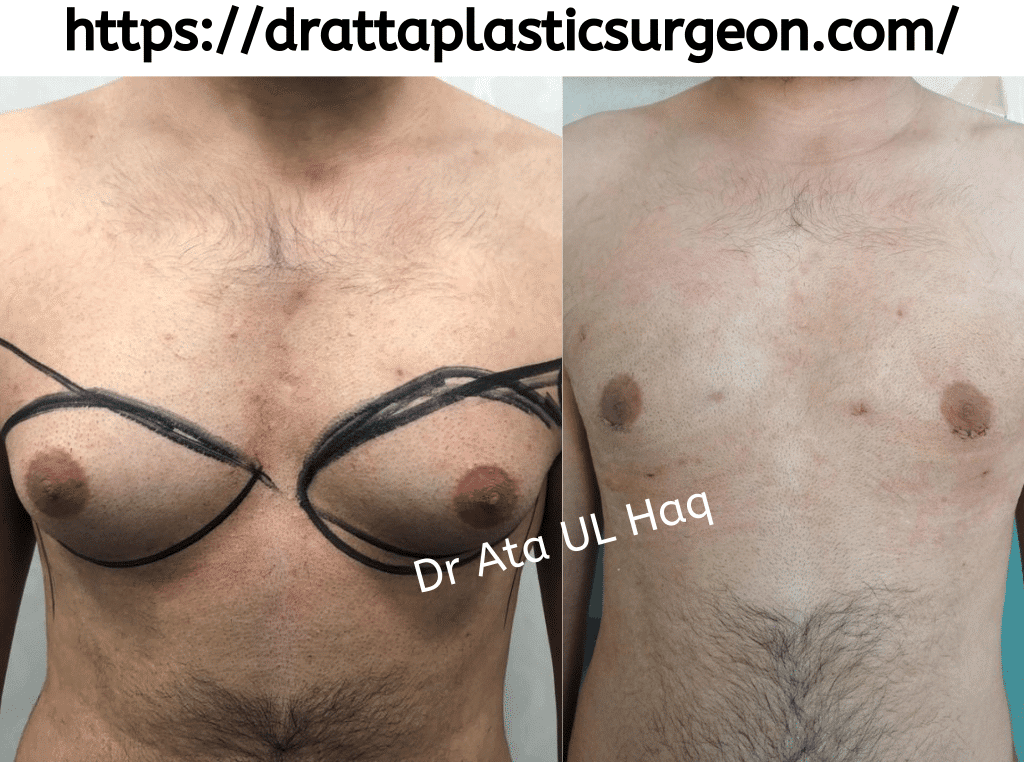
Before-and-After Results
Always review real patient transformations.
Recovery After Gynecomastia Surgery
First Week Expectations
Swelling, mild pain, and tightness are normal.
Long-Term Healing
Most men return to work in 3–5 days and resume workouts after 4 weeks.
Compression Garments Explained
These help reduce swelling and shape your new chest—wear them as advised.
Risks and Complications
Common Side Effects
Bruising, numbness, and temporary swelling.
Rare Complications
Infection, asymmetry, or fluid buildup—minimized with expert care.
Life After Gynecomastia Treatment
Physical Confidence
Say hello to fitted shirts and beach days.
Mental Wellbeing
Patients often report reduced anxiety and improved self-esteem.
Maintaining Results
Healthy living keeps your chest flat long-term.
Preventing Gynecomastia
Healthy Lifestyle Habits
Balanced diet, regular exercise, and stress control.
Avoiding Triggers
Limit alcohol, avoid steroids, and review medications with your doctor.
Why Lahore Is Becoming a Hub for Gynecomastia Treatment
Skilled Surgeons
Lahore hosts some of Pakistan’s most experienced cosmetic surgeons.
Affordable Care
High-quality treatment at a fraction of international costs.
Modern Medical Facilities
State-of-the-art clinics rival global standards.
Conclusion
Gynecomastia in Lahore is no longer a hidden struggle—it’s a treatable medical condition with real solutions. Whether you’re dealing with mild puffiness or advanced chest enlargement, help is available. From accurate diagnosis to advanced surgical techniques, Lahore offers everything you need to reclaim your confidence. Remember, your body tells your story—make sure it’s one you’re proud of.
FAQs
1. Is gynecomastia surgery permanent?
Yes, once glandular tissue is removed, it rarely returns if lifestyle is maintained.
2. Can exercise cure gynecomastia?
Exercise helps fat chest, not true gynecomastia.
3. Is the surgery painful?
Discomfort is mild and manageable with medication.
4. How long before I see final results?
Initial results appear in weeks; final contour shows in 3–6 months.
5. Is gynecomastia surgery safe in Lahore?
Yes—when performed by qualified surgeons in accredited clinics.